
A Positive Start Matters
A child's early dental visits can shape how they feel about oral health for years. At Arizona Biltmore Dentistry, we focus on building trust before expecting cooperation. We explain things in simple language, move at a pace your child can handle, and include parents in the conversation.
Our Phoenix office sees patients of all ages, so families can receive care in one familiar place. Our dental team helps children learn what to expect, practice healthy habits, and get appropriate preventive care as their mouths grow.
Dental Care for Each Stage of Childhood
Early Visits
The current practice guidance recommends a first dental visit when the first tooth appears or by the first birthday. Early appointments are usually simple. They allow us to check growth, talk about brushing and feeding habits, and help your child become comfortable with the office before a problem occurs.
Exams and Cleanings
Regular visits help us watch tooth development, gum health, bite changes, and areas that may be difficult to clean. Professional cleanings remove buildup, while age-appropriate coaching helps children understand how their daily choices affect their smiles.
Preventive Treatment
Fluoride may help strengthen vulnerable enamel, and sealants can protect the deep grooves of back teeth where food and bacteria collect. We recommend preventive services based on the child's risk and needs, not as an automatic package.
Tooth-Colored Fillings and Crowns
Baby teeth hold space, support speech and chewing, and guide permanent teeth. When decay or damage needs treatment, we explain why caring for the tooth matters and what will happen in words your child can understand.
Fluoride, Sealants, and Sports Mouthguards
As children grow, preventive care changes with them. Fluoride and sealants help protect new permanent molars, and a custom sports mouthguard made from a model of your child's teeth fits better and protects more than a boil-and-bite version. If your child plays a contact sport, ask us at their next visit.
Most children's needs can be handled in our office. When a child has very complex needs or requires care our office is not set up to provide, we will say so and help you connect with a pediatric specialist.
Helping Nervous Children Feel Safe
Children do not all respond to the dental office in the same way. Some are curious, some need time to watch, and some are frightened before they arrive. We do not want a child to feel forced through a routine cleaning at the cost of future trust. If your child has sensory sensitivities, autism, ADHD, or another need that affects how they handle new places, tell us when you schedule. We can dim the lights, reduce noise, slow the pace, offer a short preview visit, or make other simple accommodations. Parents are welcome to stay with their child throughout the visit.
Parents can help by using calm, simple language. Avoid sharing frightening stories or promising that “nothing will happen,” since an exam and cleaning are still new experiences. Tell your child that the dentist will count and check their teeth and help keep their smile strong.
Comfort Features
- A friendly team experienced in caring for different ages
- Clear explanations for both children and parents
- Pillows, blankets, and a relaxed office environment
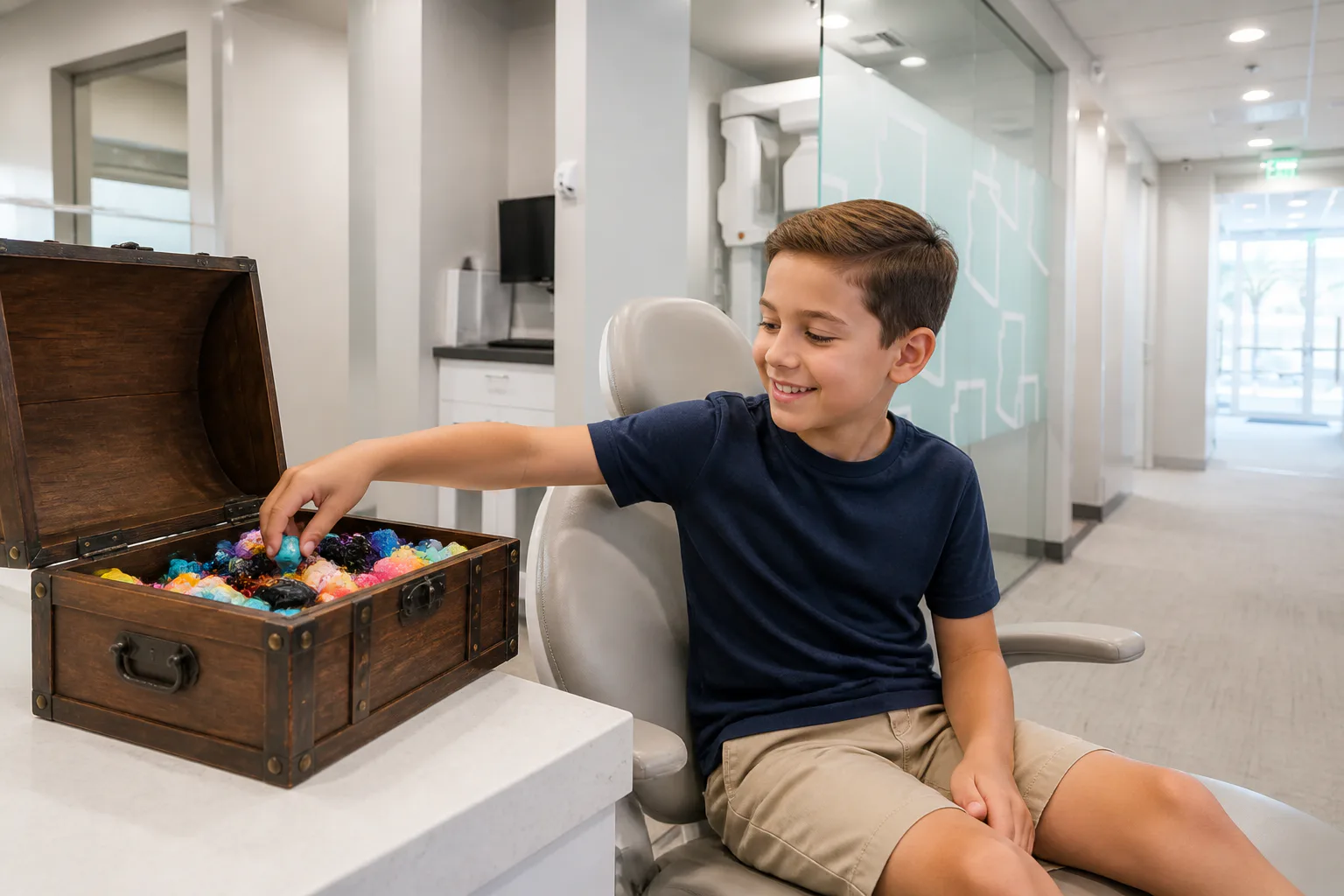
- A well-stocked toy box referenced on the current practice site
- Laughing gas and other comfort options when clinically appropriate
- Early 7 AM appointments Monday through Saturday, so visits can happen before school
Laughing gas is the most common comfort option we use for children because it works quickly and wears off within minutes. Other sedation options are discussed case by case after a health review, and for some children a pediatric specialist may be the better setting for that level of care.
What to Expect at Your Child's Visit
Health History and Concerns
We begin by asking about your child's health, medications, past dental experiences, brushing, diet, and any concerns you have noticed. This is also the time to tell us about anxieties or sensory needs.
Exam, Cleaning, and Preventive Care
The visit may include an exam, cleaning, fluoride, or diagnostic images depending on age and need. We move at your child's pace and explain each step in simple words.
Growth and Habit Check
We also look at habits such as thumb sucking or pacifier use and discuss how teeth and jaws are developing.
Home Care Guidance and Next Steps
Parents receive practical guidance for home care. If treatment is needed, we explain the options, timing, comfort plan, and expected cost before scheduling.
Questions, Answered
Pediatric Dentistry FAQs
When Should My Child First See a Dentist?
The current practice guidance recommends the first visit when the first tooth appears or by age one. An early visit can be brief and helps establish a comfortable routine.
Why Treat a Baby Tooth That Will Fall Out?
Baby teeth support eating, speech, and the space permanent teeth need. Untreated decay can cause pain or infection and may affect daily life before the tooth is ready to come out.
How Often Should My Child Visit?
Many children benefit from visits about every six months, but the schedule depends on cavity risk, gum health, development, and treatment history. We make an individual recommendation.
What If My Child Will Not Cooperate?
We focus on safety and trust. Sometimes a short familiarization visit is more valuable than pushing through care. We will talk with you about what your child was able to do and the best next step.
Is Laughing Gas Available for Children?
Yes, it may be considered for an appropriate child after a health review. Age, breathing, anxiety, and the planned treatment all affect the decision.
What Should I Do if My Child Hurts a Tooth?
Call (602) 957-8200. Tell us what happened, whether the tooth is a baby or adult tooth, and what symptoms you see. If a baby tooth is knocked out, do not try to put it back in. If an adult tooth is knocked out, hold it by the crown, keep it moist in milk, and call us immediately, since time matters. For trouble breathing, uncontrolled bleeding, or serious facial injury, seek emergency medical care.
Can I Stay With My Child During the Visit?
Yes. Parents are welcome in the treatment area. Some children do best with a parent beside them, while others cooperate more easily with a little space. We will follow your lead and your child's cues.